Handyman and Punch-list Repairs — Complete Guide
Small repairs decide big outcomes when you own, sell, or prepare a home in Austin. Handyman punchlist repairs cover the dozens of minor fixes that make a house feel finished: sticking doors, cracked caulk, loose railings, dripping faucets, scuffed walls and the inspection items buyers flag before closing. Left alone, these small defects stack up into price reductions, failed inspections and stalled negotiations. This guide explains what a punch list is, how it fits into selling or maintaining an Austin home, and where Texas licensing rules draw the line between handyman work and licensed trade work. By the end, you will know exactly which repairs to prioritize and who should handle them.
What You'll Find in This Guide
Coming soon — we're building out this topic cluster.
What Handyman Punchlist Repairs Cover and Why They Matter in Austin
A punch list is simply a written list of small repairs and finishing tasks that need completion before a project, or a home sale, is considered done. Builders use punch lists at the end of construction. Homeowners use them before listing, after an inspection, or during a seasonal maintenance sweep. In practice, handyman punchlist repairs fall into a few recurring categories.
First, there are cosmetic fixes. Think patched drywall, touch-up paint, re-caulked tubs, replaced switch plates and adjusted cabinet doors. These items cost little individually. However, they shape a buyer's first impression more than almost anything else, because visible neglect makes buyers assume hidden neglect.
Second, there are functional fixes. Doors that stick, windows that won't latch, wobbly ceiling fans, running toilets and loose deck boards all fall here. Each one works its way onto an inspection report if you ignore it. As a result, fixing them early costs less than negotiating them later.
Third, there are safety and code items. Missing smoke detectors, loose handrails, GFCI outlets near water and trip hazards on walkways belong in this group. Buyers and their agents treat these differently than cosmetic issues. In many negotiations, safety items become non-negotiable repair demands.
Why Small Repairs Carry Extra Weight in Today's Austin Market
The Austin market no longer forgives deferred maintenance the way it did during the boom years. According to LRG Realty, Austin's median home value dropped 2.3% to $429,869 in Q1 2025 as inventory climbed and homes sat longer before selling. With more competing listings, buyers can walk away from a house with a long defect list and choose one that feels move-in ready. Consequently, a few hundred dollars of punch-list work often protects thousands of dollars of negotiating position.
This is also why our team treats handyman punchlist repairs as part of the sale strategy, not an afterthought. Because we both list homes and manage the repair work through our own subcontractor network, we prioritize the fixes Austin buyers actually pay for. That means we can tell you when a $150 caulk-and-paint pass matters more than a $1,500 upgrade nobody will notice.
Punch Lists Before You Sell: Inspection Reports, Option Periods and Buyer Expectations
If you plan to sell, your punch list shows up twice. The first version is the one you build before listing. The second version arrives during the option period, when the buyer's inspector hands over a report that can run thirty pages or more. Handling the first list well makes the second list shorter and far less expensive.
Building Your Pre-Listing Punch List
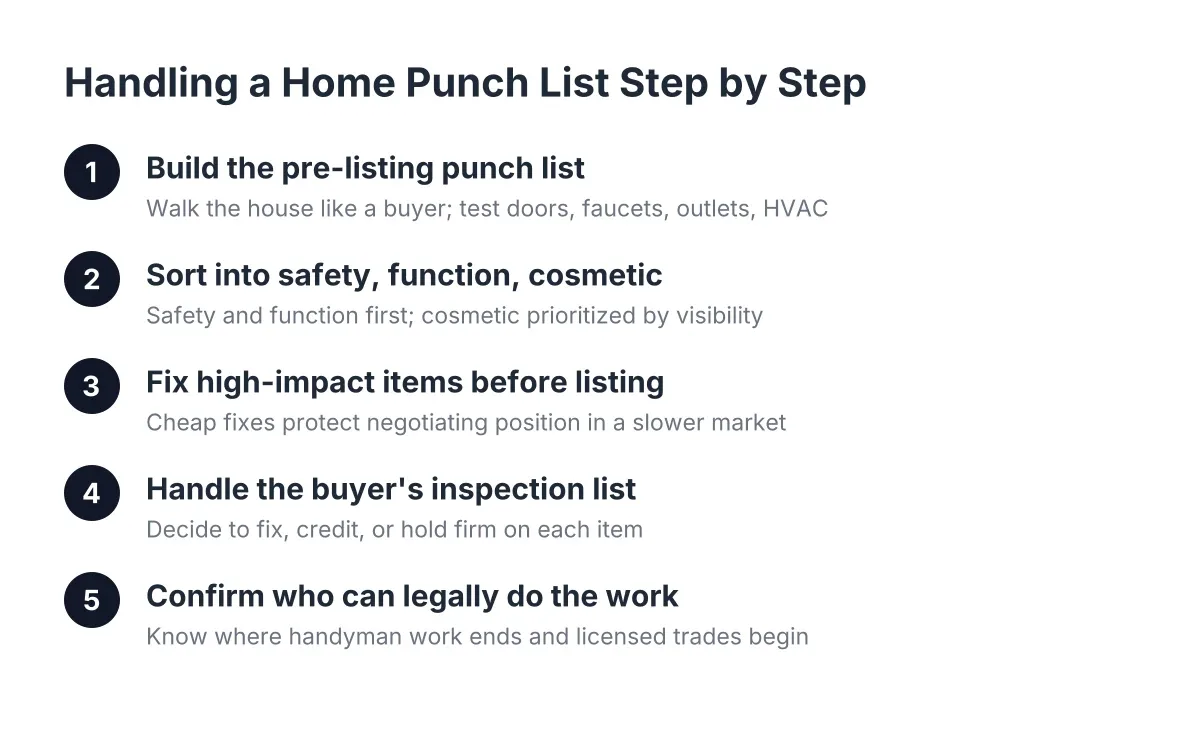
Start by walking the house like a skeptical buyer. Open every door and window. Run every faucet and flush every toilet. Additionally, test outlets, light switches, garage door openers and the HVAC system. Note anything that sticks, drips, rattles, flickers or looks worn. Then walk the exterior and check gutters, siding, fascia, fence gates and walkways.
Once you have the raw list, sort it into three buckets: safety items, function items and cosmetic items. Safety and function come first, because those are the items inspectors flag and buyers use as leverage. Cosmetic work comes next, prioritized by visibility. For example, the front door, entry, kitchen and primary bathroom deserve attention before a guest-room closet.
Handling the Buyer's Inspection Repair List
Even a well-prepared home generates some inspection findings. The difference is scale. A tight, pre-repaired home might produce a short list of minor notes. A neglected one produces a document that scares buyers and invites aggressive repair credits. That said, not every inspection item deserves a repair. Some are better handled as small credits, and some are reasonable to decline. This is where having one team on both the transaction and the tools pays off. Because the people negotiating your contract also price and manage the repairs, you get honest math on each item: fix it, credit it, or hold firm.
Most sellers do not navigate this alone. NAR's 2025 report found that 91% of sellers used a real estate professional to complete their transaction, according to the National Association of Realtors. The gap our model closes is the one between that professional and the repair crew, so nothing gets lost between the inspection report and the finished work.
Who Can Legally Do What: Texas Licensing Rules for Handyman Work
Texas gives handymen more room to operate than many states, but real limits exist. Understanding them protects you from unpermitted work, insurance problems and repairs that fail a buyer's inspection twice. Before you hand anyone a punch list, know where general handyman work ends and licensed trade work begins.
Work a Handyman Can Do in Texas
Texas does not require a state license for general handyman work. As a result, a handyman can legally handle carpentry, drywall repair, painting, tile work, fence and gate repair, door and window adjustment, fixture swaps, caulking, weatherstripping and most cosmetic punch-list items. This covers the large majority of what appears on a typical pre-listing or inspection punch list. For bigger scopes like or , the same rule generally applies: skill and insurance matter, but the state does not license the trade itself.
Where Licensing Kicks In: Plumbing, Electrical and HVAC
Plumbing, electrical and HVAC work sit behind state licensing walls. The Texas Department of Licensing and Regulation and the Texas State Board of Plumbing Examiners regulate who can perform this work. You can review the electrical licensing rules directly on the Texas Department of Licensing and Regulation website.
In practice, the line runs roughly here. A handyman can usually replace a faucet, a toilet flapper or a garbage disposal, because these count as minor swaps rather than plumbing system work. However, repairing supply lines, moving drains or working inside the wall requires a licensed plumber. On the electrical side, anything beyond a like-for-like fixture swap generally calls for a licensed electrician, and even simple outlet replacement sits in a gray area many careful homeowners route to a pro.
Why does this matter for your punch list? Because buyers' inspectors look for evidence of unlicensed work, and insurance carriers can deny claims tied to it. Beyond that, a failed repair discovered during the option period costs more credibility than the original defect. With this in mind, we route every punch-list item to the right person: our handyman crews for general work, and licensed trade partners from our subcontractor network for anything regulated. You get one point of contact either way.
Frequently Asked Questions
What is a fair price to pay a handyman per hour?
Most Austin-area handymen charge $50–$100 per hour, depending on experience, insurance and work type. Many set a minimum service charge of one to two hours for travel and setup. For long punch lists, request a flat project price instead, as bundled work typically costs less per item.
What is a punch list and why do homeowners need it?
A punch list is a written checklist of small repairs and finishing tasks needed before a home is sale-ready. In fast-growing markets like Manor and Leander, punch lists often center on builder warranty items, settling cracks and finish-quality fixes. Batching repairs into one visit avoids repeated minimum charges.
Can a handyman do plumbing work in Texas?
Only partially. A handyman can replace faucets, showerheads or toilet fill valves. However, Texas requires a licensed plumber for supply lines, drains, gas lines or wall work. Unlicensed plumbing can create inspection and insurance problems.
What is the average hourly rate for a handyman in Texas?
Handyman rates typically run $45–$90 per hour across Texas, with metro areas like Austin at the higher end. Rates vary by task complexity, insurance coverage and travel distance. Comparing flat quotes for your full punch list often provides clearer value than hourly comparisons alone.
Can a handyman replace an electrical outlet in Texas?
Texas generally reserves electrical work for licensed electricians. Simple like-for-like outlet swaps are low-risk in practice, but wiring changes, GFCI additions or panel work require a license. For homes heading to market, use a licensed electrician to avoid inspection flags.
Handyman Punchlist Repairs: Ready to Get Started?
If your Austin home has a growing list of small repairs, or an inspection report just landed in your inbox, we can help you sort what matters, price it honestly and get it done. Our broker-led team manages repairs through our own subcontractor network, and we prioritize the fixes that protect your sale price. Reach out for a walkthrough, and we will turn your punch list into a plan.