Interior Paint Colors That Help Austin Homes Sell: 8 Choices Buyers Notice
Walk through enough Austin showings and a pattern emerges: buyers decide how they feel about a house in the first ninety seconds, and interior paint colors do more of that emotional work than almost anything else in the room. The tricky part is that the colors that photograph well on Pinterest are not always the colors that move an offer in Hyde Park or a rent number in East Austin. With Austin's median home value dropping 2.3% to $429,869 in Q1 2025 as homes sat longer before selling, according to LRG Realty, the margin for a wrong color choice got thinner. Whether you just closed on an investment property or you are repainting a house you plan to stay in for a decade, here are eight color decisions that hold up at actual showings, drawn from what Austin buyers respond to when they walk through a door.
Why Interior Paint Colors Matter Before Anything Else
Painting is the lowest-cost improvement with the widest reach in a house. Every room gets touched, every scuff and nail hole disappears, and the whole property reads as maintained rather than tired. For an investor who just closed on a dated ranch house in Pflugerville, a full interior repaint often costs less than a single bathroom vanity swap and changes the buyer's read on the entire home.
The catch is that paint only delivers if the color choices are disciplined. A house with six competing wall colors reads as a project. A house with two or three coordinated colors reads as move-in ready. That distinction shows up in days on market, and in a market where inventory keeps climbing, days on market cost real money.
1. Warm White Walls Beat Cool Gray in Today's Austin Market
The single most reliable interior paint color for resale in Austin right now is a warm, soft white. The gray-everything era that dominated 2015 to 2020 now dates a house on sight; buyers touring listings in Zilker or Travis Heights have seen enough builder-gray boxes to associate the color with an older remodel. A warm white with a slight cream or greige undertone keeps rooms bright in Texas sun without the sterile hospital feel of a pure bright white.
Interior paint colors for 2026 have moved decisively toward warmth, and that shift shows at showings. Rooms painted in warm whites photograph larger in listing photos, which matters because most Austin buyers screen a home on their phone before they ever schedule a walkthrough.
2. Keep the Whole House to Two or Three Colors, Not Six
How many paint colors belong in a house interior? For resale, the answer is two or three: one main wall color throughout the living areas, one trim and ceiling white, and at most one accent color used deliberately. This is where DIY sellers and first-time investors lose money, painting each bedroom a different personality.
A buyer walking a three-bedroom in Round Rock with a lavender office, a navy nursery, and a red dining room starts a mental repaint budget on the spot. Every color they plan to change is a discount they will ask for. Consistency reads as quality, and it also makes the painting job itself cheaper because crews work faster with fewer cut lines and fewer product changes.
3. In Kitchens, Let Cabinets Carry the Color and Keep Walls Quiet
Interior paint colors for the kitchen work differently than the rest of the house because the cabinets, not the walls, are the dominant surface. If you are repainting cabinets, a muted sage green or a deep warm neutral on a lower-cabinet or island can give a dated kitchen a current look for a fraction of a full remodel. Keep the walls in the same warm white as the rest of the house so the cabinet color does the talking.
For example, suppose an investor buys a 1980s house in Manor with oak cabinets in solid shape. Painting those cabinets and the walls, then swapping hardware, is often the highest-leverage cosmetic move in the whole scope. That is a call worth pricing before committing to new boxes; a cabinet repaint might run a few thousand dollars as an estimate, while replacement runs five figures.
4. Bedrooms Can Go Slightly Warmer and Softer, but Skip the Statement Colors
Bedroom walls are the one place a step away from the main house color pays off, as long as the step is small. Interior paint colors for the bedroom that show well in Austen listings tend toward soft warm neutrals, muted clay tones, or a pale green that reads restful rather than themed. Primary bedrooms painted in dark, moody colors photograph small and force staging to fight the walls.
However, the aging-in-place homeowner planning to stay ten years has more room to please themselves here. A deep green office or a rich terracotta reading room is a livability choice, not a resale mistake, if selling is genuinely off the table for the next several years. The rule tightens only when a listing date is in view.
5. Paint the Trim, Doors, and Ceilings, Because Buyers Notice What You Skipped
Half-done paint jobs undercut the whole investment. Fresh warm-white walls next to yellowed trim, scuffed doors, and a ceiling with old water stains tell a buyer the seller cut corners, and they will wonder where else. Ceilings, trim, interior doors, and closet interiors all belong in the scope, especially in older housing stock around Tarrytown and Hyde Park where decades of layers show.
This is also where professional painting services separate from a weekend DIY effort. Crisp cut lines between wall and ceiling, doors sprayed rather than brushed, and properly caulked trim are the details that make a repaint read as a renovation instead of a touch-up. A managed project with a dedicated subcontractor team gets there faster and with less rework.
6. Use One Dark Accent Deliberately, Not Everywhere
One well-placed dark or saturated element gives listing photos a focal point: a black front door interior, a deep green built-in, or a charcoal fireplace surround. The keyword is one. Buyers respond to contrast when it looks intentional and recoil when it looks like indecision.
For the living room, current interior paint colors favor keeping all four walls in the main house neutral and letting the accent live on millwork or a single architectural feature. The old single accent wall in a flat color, with no trim or built-in to justify it, now reads as a 2012 habit and often gets painted over by the next owner anyway.
7. Know What a Repaint Costs in Austin Before You Scope It
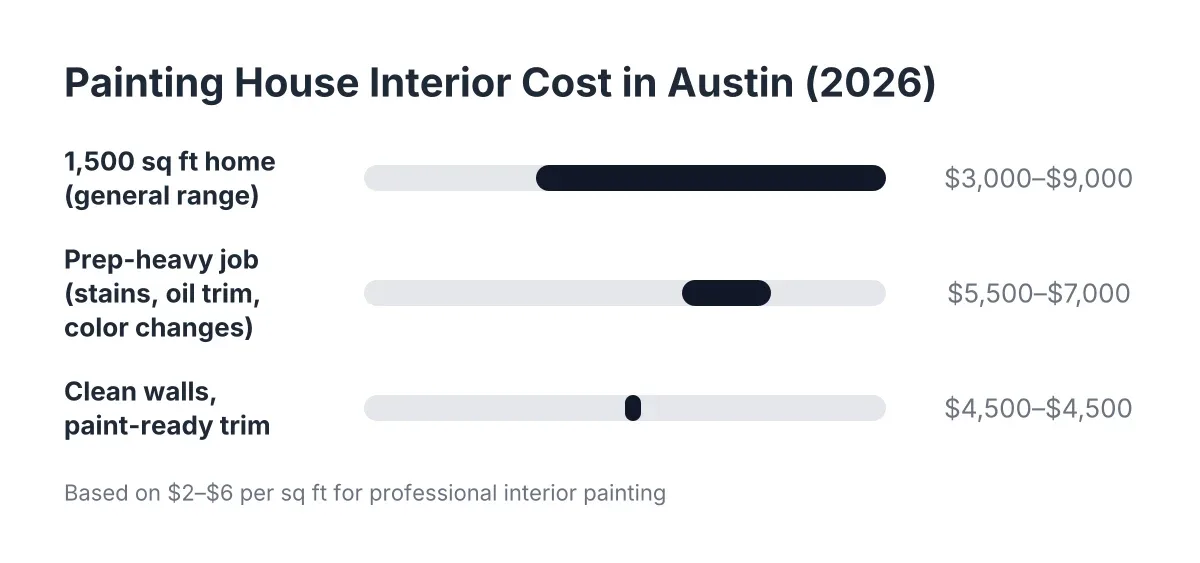
Interior painting costs in Austin vary with square footage, ceiling height, wall condition, and how much trim and cabinet work is included. As a rough illustrative range for 2026, a straightforward full-interior repaint on a 1,800 square foot house might land somewhere between $4,000 and $9,000, with heavy prep, tall ceilings, or cabinet painting pushing that higher. Treat those numbers as ballpark framing, not a quote; wall condition alone can swing an estimate meaningfully, so a walkthrough is the only honest way to price a specific house.
For an investor running numbers against a target rent or resale figure, the discipline is the same as any other line item:
- Get the estimate against a defined scope, room by room, before closing your renovation budget.
- Price walls-only versus walls-plus-trim-plus-ceilings as separate line items so you can see what the complete job actually costs.
- Fold paint into the same managed project as flooring and punch-list repairs; sequencing paint after drywall and before floors avoids paying twice for protection and touch-ups.
8. Exterior Color Sets the Showing Before Anyone Opens the Door
Exterior painting colors decide whether a buyer's first photo of the house works for or against you. In Austin neighborhoods from Westlake to Buda, the exteriors that show best right now are warm whites and soft creams with dark trim, deep greens on the right architecture, and earthy neutrals that sit well against limestone and live oak. A dated exterior color, or chalky, peeling paint, drags down every interior dollar you spent.
Exterior work is also where DIY math breaks down fastest. Knowing how to paint a house exterior properly means pressure washing, scraping, priming bare wood, caulking gaps, and choosing coatings that survive Central Texas sun; two-story homes add ladder and safety costs that make professional crews the practical answer for most owners. Exterior painting cost runs higher per square foot than interior work for exactly these reasons, so get it estimated rather than guessed.
Matching the Color Decision to Your Actual Plan
The right paint strategy depends on which reader you are. If you bought a property to renovate and resell or rent, every color choice should serve the broadest pool of Austin buyers or tenants, which means warm neutrals, tight color counts, and money spent on prep and trim rather than trend colors. With the median Austin sale price at $476,800 in Q3 2025 per Redfin data, buyers at that price expect a finished, coherent product, not a canvas of experiments.
If you are staying put for the next five or ten years, flip the priority: paint for how you live, and accept that a future repaint before any eventual sale is a normal, affordable step, not a sunk cost. The one mistake both groups share is treating color selection as the last decision instead of the first. Choose the palette before the crew shows up, sample it on the actual walls in the actual light, and the rest of the project gets simpler.
Where it helps to have a broker-led team in the conversation is on the resale side of that judgment: knowing which finish level buyers in Leander expect versus what a Travis Heights bungalow needs is listing experience, not a paint chart. Color is cheap to get right and expensive to get wrong twice.
If you need pre-listing home renovation, Lujo Realty can help.
Prefer to talk it through? Call Lujo Realty — a quick call is usually the fastest way to get a straight answer for your situation.